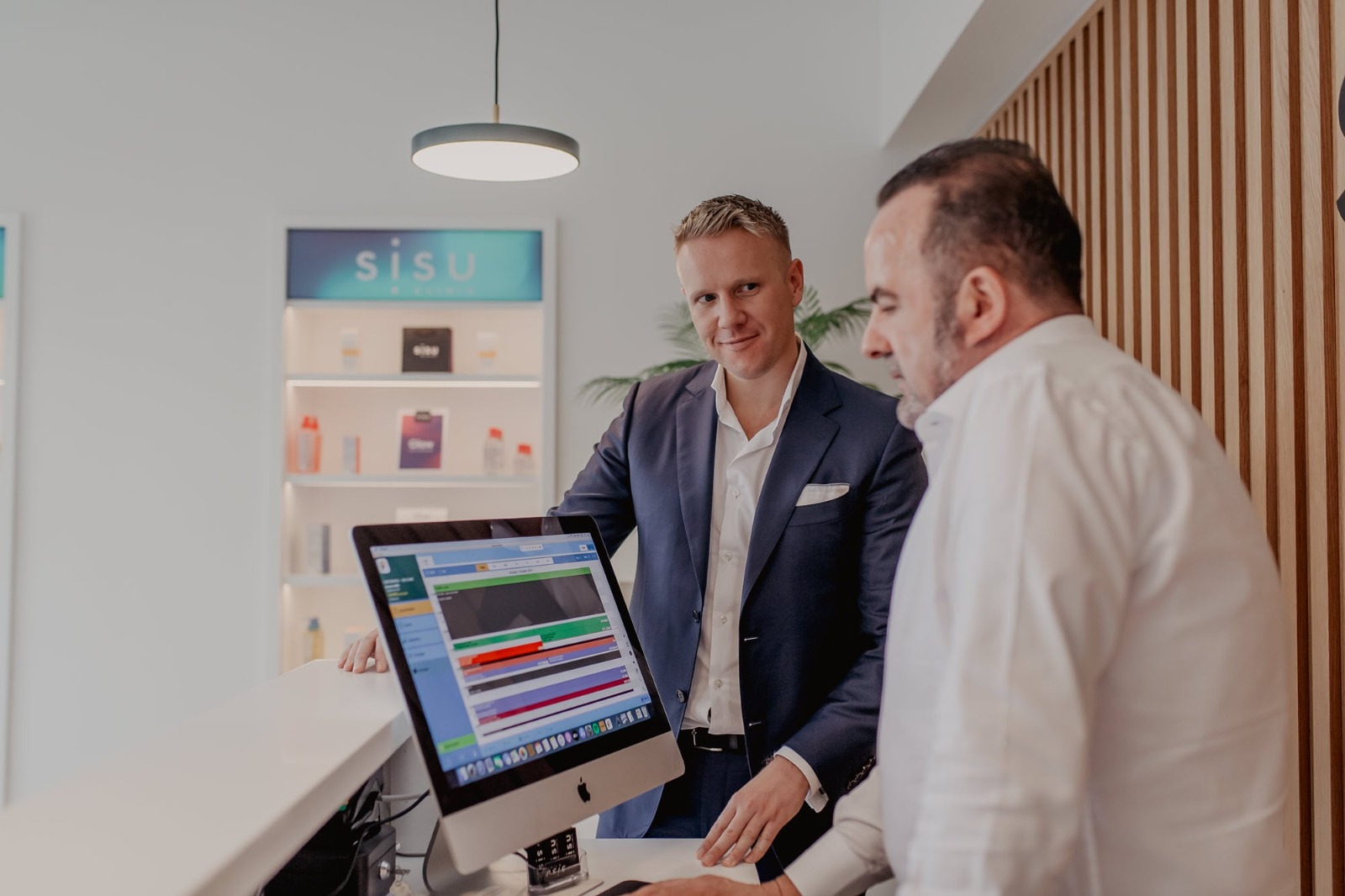

There’s no single “best” med spa software for every business. The right platform depends on your compliance needs, your growth stage, and whether you’re optimizing for clinical documentation or business growth. But for med spas and multi-location groups that want bookings, marketing, retention, and reporting working from one connected system, an all-in-one growth platform, like Phorest, is generally a better fit than stitching together several separate tools.
This guide breaks down what med spa software actually does, what to check before you buy, and how to figure out which category of platform fits your business, whichever brand you end up choosing.
What is med spa software?
Med spa software is a business management platform built for medical aesthetics practices. It typically combines online booking, client records, digital consent forms, marketing tools, payments, and reporting in one system, so owners and providers aren’t switching between separate apps to run the clinic. Phorest’s med spa platform is built around this same combination, and layers the clinical side on top: treatment documentation, before-and-after photos, and digital consent forms, running on the same system as the marketing, CRM, and reporting tools used for the rest of the business.
Most med spa software includes some combination of:
- Online booking and appointment scheduling
- Client records and treatment notes
- Digital consent forms and intake questionnaires
- Marketing automation and CRM (email, text, loyalty programs)
- Point-of-sale and payment processing
- Reporting and revenue analytics
Some platforms also include clinical charting, treatment plan management, and before-and-after photo storage, though the depth of these clinical features varies a lot by vendor. That variation is usually the biggest difference between platforms built primarily for medical practices and platforms built primarily for the broader beauty and wellness industry.
What features should med spa software include?
Most med spas need six categories covered well: booking, client communication, marketing automation, CRM, payments, and reporting. Full clinical EMR functionality matters for some practices, but it’s the exception, not the rule.
| Feature category | What it does |
| Practice management / booking | Scheduling, calendar, online booking |
| Communication platform | Client texts, emails, reminders |
| Marketing automation | Campaigns, segmentation, follow-up |
| CRM | Client history, preferences, loyalty |
| EMR (electronic medical records) | Structured clinical documentation, insurance billing workflows |
| AI-assisted tools | Smart scheduling, automated documentation |
The EMR row is worth calling out specifically. Most med spas (nurse-led injectables clinics, aesthetician-led skincare studios, medically supervised wellness spas) don’t need hospital-grade EMR infrastructure. They need clean, compliant charting, before-and-after photos, and consent forms connected to the same system that runs bookings, payments, marketing, and reporting. Practices with heavy insurance billing or complex medical-records requirements are the exception, and they’re often better served by a dedicated clinical EMR instead.
Is med spa software privacy compliant in Canada?
Any software that stores or transmits client information tied to health or treatment history needs to support the privacy requirements that apply to your clinic. In Canada, this can include the federal Personal Information Protection and Electronic Documents Act (PIPEDA), as well as provincial privacy legislation depending on where your clinic operates. Alberta, British Columbia and Quebec have substantially similar private-sector privacy laws, while certain provinces also have specific legislation covering personal health information. The requirements can also differ depending on how information is collected, used, disclosed and transferred.
Because most owners can’t personally audit a vendor’s security infrastructure, it helps to know what privacy-conscious software should actually offer:
- Encrypted storage for client records, photos, and consent forms
- Role-based access, so only the right team members can view sensitive information
- Digital consent capture that’s easy for clients and simple to retrieve later
- A clear data protection agreement between your clinic and the vendor
- A defined process for your data if you ever decide to switch platforms
Phorest is built with these requirements in mind, with digital consent tracking, restricted data access, and secure record-keeping designed to help your clinic meet applicable privacy and data protection requirements as part of daily operations, not a separate project.
For a plain-language overview of Canada’s private-sector privacy requirements, the Office of the Privacy Commissioner of Canada provides official guidance on PIPEDA requirements and provincial privacy laws.
How many different systems does a med spa actually need?
In an ideal setup, one. In practice, most med spas run more than that, often juggling a booking tool, a marketing platform, a separate CRM, and sometimes a standalone EMR just to run a single location.
That fragmentation has a real cost beyond the subscriptions themselves. Every extra system adds:
- Data that doesn’t talk to itself: client history in one place, marketing engagement in another, revenue in a third
- More logins, more training, and more room for something to slip through the cracks at the front desk
- No single view of which campaigns, providers, or services are actually driving bookings and retention
The fix isn’t necessarily fewer features. It’s the same features, connected, so a rebooking reminder, a loyalty point, and a revenue report are all pulling from the same client record instead of three different ones, with booking, CRM, marketing automation, and charting living in one system instead of several.
When should a med spa consider switching software?
Consider switching if your current system can’t keep up with growth, if support response times are slow enough to affect daily operations, or if you’re manually reconciling data between two or more tools every week.
Common signs it’s time to look elsewhere:
- You’ve outgrown a single-location setup and need reporting across multiple sites
- Recurring bugs or downtime are affecting bookings or payments
- Support tickets take days to resolve, not hours
- You’re paying for marketing tools you don’t fully use because they don’t integrate cleanly with your booking system
- You can’t tell which campaigns or providers are driving revenue without pulling numbers manually from more than one place
- You’re adding a service line (like injectables or advanced skincare) that your current platform doesn’t support well
Switching software is disruptive, so it’s worth being honest about whether the real problem is a training gap or an actual platform gap before committing to a migration.
EMR vs. growth platform: what’s the real difference?
An EMR (electronic medical record) is built primarily for clinical documentation and infrastructure designed around insurance billing. A growth platform is built primarily for the business side of a med spa (bookings, marketing, retention, staff performance, and revenue reporting), usually with clinical documentation such as charting, before-and-after photos, and consent forms built directly in, but without full clinical or insurance-grade EMR depth.
| If your practice is… | You probably need… |
| A nurse- or aesthetician-led med spa focused on retention and growth | A growth platform with integrated charting and consent forms |
| A dermatology or plastic surgery practice with heavy insurance billing | A dedicated clinical EMR |
| A multi-location med spa group scaling memberships and marketing | A growth platform built for multi-location reporting |
| A single-provider clinic focused mainly on documentation and compliance | A lightweight EMR or hybrid platform |
Neither category is “better” in the abstract; they’re built for different jobs. The mistake is buying a system suited to a stage or model you’re not actually operating at.
What’s the best med spa software for multi-location growth?
For med spas and clinic groups scaling to multiple locations, the best software connects marketing, bookings, retention, and reporting across every site, so an owner can see performance location by location without pulling data from separate systems for each one. This is the exact scenario Phorest is built for, and it shows up in a few concrete ways:
- Centralized reporting across locations, so owners can see which sites, providers, and campaigns are actually driving bookings and revenue, not just guessing based on gut feel
- Membership, package, and loyalty tools built to create predictable recurring revenue as new locations come online
- Marketing automation and CRM connected to the same client record used for booking and rebooking, so retention campaigns are based on real client behaviour instead of a separate marketing database
- Consultative onboarding and migration support, since moving multiple locations onto a new platform is a bigger project than switching a single clinic
To be direct about where this doesn’t apply: if your priority is deep clinical EMR functionality (for example, a practice with significant insurance billing), a dedicated clinical EMR may be a better primary system, potentially used alongside a growth platform for the marketing and retention side of the business.
Med spa software buyer’s checklist
Before signing a contract, walk through this list with any vendor:
- Will they help your clinic meet applicable Canadian privacy compliance requirements, and how?
- Does the platform include online booking, consent forms, and client records in one place?
- Can it run marketing campaigns and show you which ones actually drove bookings?
- Does it support memberships or packages for recurring revenue?
- Can it report across multiple locations, now or in the future?
- What does onboarding and data migration actually involve, and how long does it take?
- What’s the typical support response time, and how is support delivered?
- What’s the total cost including the add-ons you’ll likely need in year two?
Frequently asked questions
How much does med spa software cost?
Costs vary widely by feature set, location count, and vendor, often spread across more than one platform. All-in-one systems can consolidate that spend, though final pricing depends on the number of locations, users, and add-ons like marketing automation or advanced reporting.
Does med spa software need to meet privacy requirements in Canada?
Yes. If a platform stores or transmits client information tied to treatment history, photos, or consent forms, it needs to support the privacy requirements that apply to the clinic. Depending on the province and how information is handled, this may include PIPEDA or provincial privacy legislation. Phorest is built with privacy and data protection requirements in mind, with encrypted storage, controlled access, and digital consent tracking built into the platform, so supporting compliance requirements can be part of daily operations rather than a separate project.
Can one platform manage multiple med spa locations?
Yes. Growth-focused platforms are increasingly built for this. Look for centralized reporting across locations, consistent client records regardless of which location a client visits, and marketing tools that can run brand-wide campaigns or location-specific ones.
What’s the difference between med spa software and regular salon or spa software?
Med spa software generally adds clinical elements, like consent forms, charting, treatment plans, and before-and-after photo storage, that a standard salon or day spa platform doesn’t need. Phorest, for example, builds these clinical tools directly into the same platform that runs marketing, CRM, and reporting, rather than treating them as a separate add-on.
How long does it take to switch med spa software?
It depends on how much historical data (client records, appointment history, membership details) needs to migrate, and how many locations are involved. A single-location switch can often be completed in a few weeks with a structured onboarding plan; multi-location migrations typically take longer and benefit from a dedicated onboarding specialist. Phorest, for example, assigns a dedicated migration team to handle data transfer and onboarding regardless of how many locations you run.
Finding the right fit for your med spa
There isn’t one “best” med spa software for every business, but there is a best question to ask: does this platform match the job you actually need done? If that job is clinical documentation with deep insurance billing infrastructure, look at a dedicated EMR. If that job is growing a retention-led, multi-location med spa business, with bookings, marketing, memberships, and reporting all pulling from the same client record, a connected growth platform is built for exactly that.
Phorest is built for the second scenario: clinics that need real clinical documentation (charting, before-and-after photos, treatment plans, and consent forms), plus the marketing, CRM, and reporting tools to run the business around it, all in one place. See how Phorest works for med spas. You can also check the privacy requirements that apply in your province with the Office of the Privacy Commissioner of Canada.