
On average, salon teams spend 45 hours a month dealing with payment-related admin after the client has already left. This doesn’t mean 45 hours taking payments; that’s 45 hours untangling them.
These situations could include cash-ups that take longer than planned, deposits that need chasing or explaining, or tips that raise questions rather than landing cleanly in accounts. Small discrepancies don’t look like much on their own, but can somehow regularly end the day on a tense note.
None of this shows up on a profit-and-loss sheet, but every salon owner, manager, and front-desk team member feels it.
Payments are often described as simple – a necessary step between service and goodbye. In reality, they’re one of the most repeated processes in a salon day. They touch appointments, reporting, team earnings, and the client experience itself. When that process isn’t fully integrated, friction creeps in quietly… and compounds over time.
This results in more than just extra admin, missed revenue, and inconvenience, but also lost headspace, and avoidable stress. It creates a workflow that asks teams to do more work than they should. The truth is this: the highest cost of payments isn’t the fee. It’s the invisible time, energy, and revenue you and your staff absorb every single day, just to keep things moving.
However, this is where integrated payments can make a difference. When tipping, payments, and deposits live inside the same system as your appointments and reporting, they stop being something you manage, and start being something that works in the background, removing friction across the entire salon day.
Where Payments Quietly Steal Time from Your Day
Phorest data shows that salons across the UK and Ireland using fully integrated payment systems spend significantly less time – up to 12 hours less – on end-of-day admin, than those managing payments across multiple systems. This isn’t because they work faster, but because there’s less to fix.
Time loss around payments rarely stems from a single issue. It comes from accumulation: a card payment that needs to be matched to an appointment, a cash total that’s slightly off, or a deposit that needs checking before a client rebooks. Each moment is small, but together, they stretch the day longer than it needs to be.
For front-desk teams, this often means multitasking under pressure; switching between screens and resolving discrepancies while clients wait. For owners and managers, it means staying late to make sure the numbers line up, or carrying unanswered questions into the next morning.
When payments aren’t integrated, reconciliation becomes a manual task. When they are, it becomes a background process.
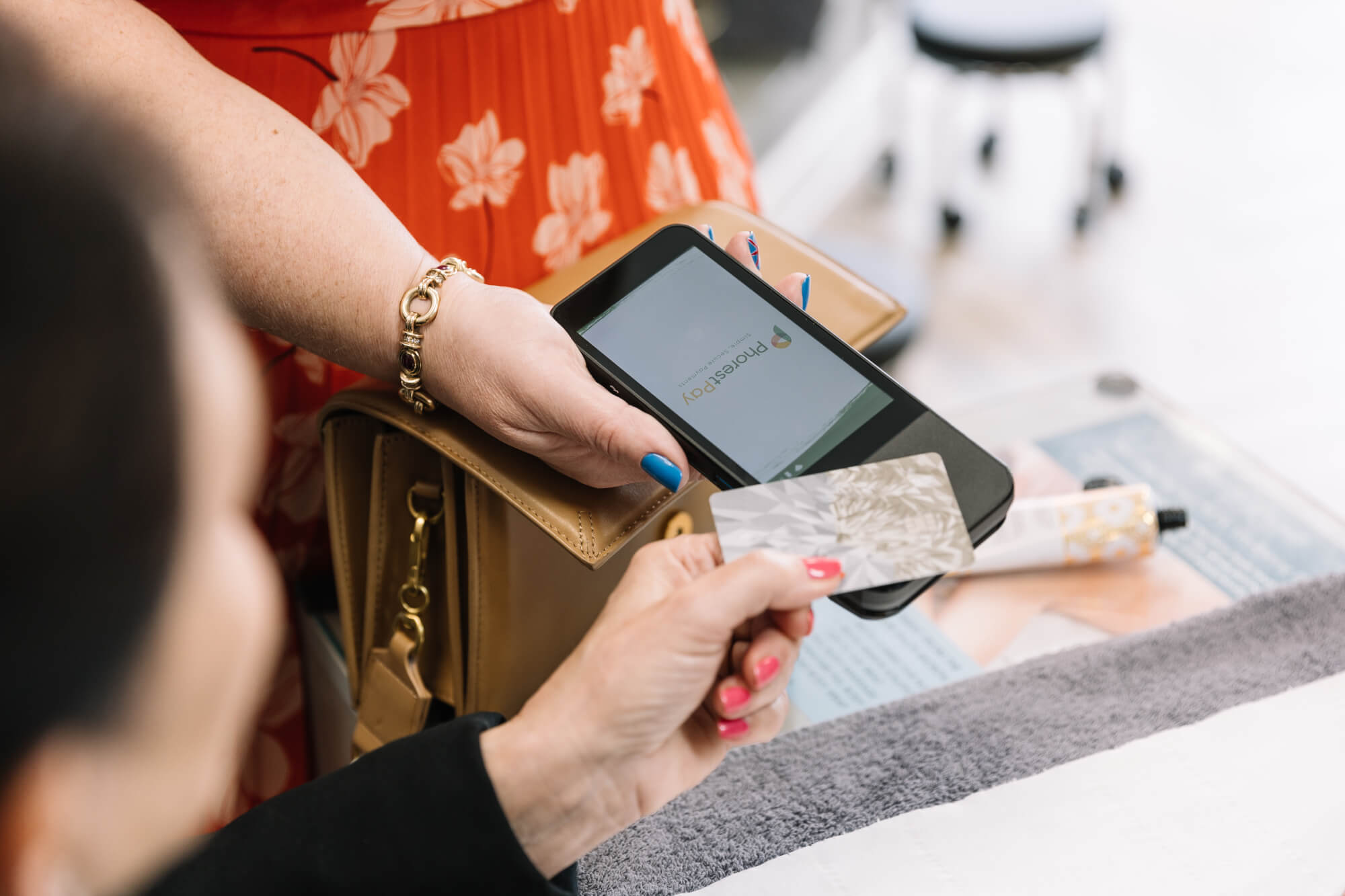
With PhorestPay, payments are automatically tied to appointments as they happen. Card, deposit, and tip data flows directly into the same system used for bookings and reporting, removing the need to cross-check or chase information at the end of the day. Cash-ups are cleaner, discrepancies are fewer, and visibility is immediate.
“We took PhorestPay on about a year ago, and it’s totally transformed cash reconciliation. Our bookkeeper has a much easier time. I have a much easier time. My reception team has a much easier time.” –Clare Gleadell, Director of Beautique in Loughborough
Over the course of a week, that time adds up. Over the course of a year, it becomes a capacity for better services, calmer teams, and a business that closes each day with confidence. At Phorest, we believe that saving time isn’t about rushing, but about removing the work that didn’t need to be there in the first place.
The Revenue That Slips Through the Cracks
According to Phorest insights, salons that take deposits and enable digital tipping see a measurable improvement in retained revenue, often without changing prices, services, or team structure.
The difference isn’t in what they charge; it’s in what they keep.
Revenue loss in salons is rarely dramatic. It quietly reveals itself: tips that never quite materialise, appointment gaps left by no-shows, payments taken but not fully visible until untangled.
Tipping is a great example. When it relies on memory, cash, or awkward prompting at the desk, it becomes inconsistent by default. Some clients tip generously, others tend to forget, and teams are left with earnings that fluctuate for reasons they can’t control. Phorest’s research shows a 25% uplift in PhorestTips, when digital prompts are enabled on terminals.
“Our tips have increased massively. Most of our team now get between £20-£80 a week in just card tips!” –Kyle Palmer, Founder and Salon Director of The Honeycomb in Carcroft
The same quiet erosion happens with no-shows. Without deposits, a missed appointment doesn’t simply leave an empty chair; it creates a knock-on effect for team earnings, schedules, and daily targets. According to Phorest’s research, when salons take a booking deposit, they can reduce no-shows by up to 69%. With deposits built into the booking journey, expectations are clear from the outset, and attendance follows.
“Before using Phorest’s deposit feature, we faced frequent last-minute cancellations. Now, with deposits in place, clients think twice before cancelling, and our schedule runs more smoothly.” –Paul Beatty, Co-Owner of Beauty at the Gate in Grimsby
Then, there’s visibility. When payments, refunds, and deposits live across multiple tools, understanding what’s been taken (and what’s still outstanding) becomes a manual exercise. Decisions are delayed, questions linger, and revenue that should feel settled remains uncertain.
With tipping seamlessly prompted at checkout, deposits embedded into the booking experience, and every payment flowing directly into real-time reporting, Phorest removes that ambiguity. The PhorestPay system gives owners and managers a clear, immediate view of what’s been earned and already accounted for.
The result offers greater confidence in your revenue. You’re rewarding your team fairly and consistently. You’re protecting appointments before they happen. You have time to stop money slipping through the cracks. Earning more doesn’t always mean doing more; it means letting your systems do the work they were meant to do.
Why Payments Affect Your People More Than You Think
Based on Phorest research, teams consistently cite manual admin tasks – including end-of-day processes – as one of the most emotionally draining parts of the role. This isn’t because they’re difficult, but because they arrive when energy is already low.
While payments are often viewed as a back-office concern, their impact is felt most clearly on the floor and at the desk. When tips are unclear, when questions linger around who earned what, or when the front desk is under pressure to resolve issues quickly, that friction doesn’t stay contained. It shapes how the team experiences their day… and where that day ends.
Tipping plays a particularly important role. For staff, tips go far beyond a sign of appreciation – they’re extra income. When that income feels inconsistent, it can quietly undermine morale. However, when it’s clear and reliably allocated, it does the opposite.
“Switching on PhorestTips on our PhorestPay terminal has seen our stylists take an average of £500 extra home a month! By embracing these systems, we’ve not only created a better experience for our clients, but motivated our staff at the same time.” –Helen Massimo, Owner of HM Hairdressing in Calne
Front-desk experience matters just as much. When payments are fragmented, desks become pressure points: answering questions, explaining discrepancies, and managing queues simultaneously. When payments are integrated, those moments soften, making way for faster interactions and smoother handovers. The desk becomes a place of welcome again, and not of problem-solving.
Clients notice that shift, too. A modern, seamless checkout signals professionalism and care – reinforcing trust in the business and the people representing it. A case study from New Payment Innovation showed that integrated payments could reduce average checkout time by up to 73%.
Phorest clients know the feeling well.
“Using PhorestPay makes checkout so much easier, as the clients’ services and product purchases are automatically processed on the payment machine. Tips have increased massively, as it prompts clients to tip.” –Val Cussell, Owner of Chalk by Val Cussell in Brighton
Over time, these small improvements compound. Teams who feel fairly rewarded, supported by systems, and spared unnecessary friction are more likely to stay and deliver consistently high service. Payments stop being a daily irritant and become a quiet infrastructure, holding the experience together without demanding attention.
The real retention impact doesn’t show through grand gestures, but through days that end cleanly, where teams feel backed by the systems they’re expected to use. When payments work properly, they support more than the business – they support the people who make it run.
The Value of Fully Integrated Payments
By this point, one thing becomes clear: the real gains don’t come from any single payment feature on its own. They come from what happens when payments are no longer treated as a separate task but are integrated into how the business runs.
Terminals, tipping, and deposits each solve a specific problem. However, when they’re connected to the same system that manages bookings, reporting, and team performance, their value multiplies. There’s a clean flow of information, expectations are set early, and decisions can be made with confidence.
This is the difference between using payments, and integrating them.
In fully integrated salons, payments support the day rather than interrupt it. Everything sits in one place, updates in real time, and works quietly in the background. That’s what allows salons to operate more professionally, removing added complexity.
PhorestPay is designed to function as part of a wider operating model, where payments reinforce the experience, rather than fragment it. It creates consistency across the client journey, clarity across the business, and stability for the team… without extra effort to hold it all together.
The salons that see the biggest gains aren’t working harder; they’re removing friction. When that friction disappears, there’s space for time, space for revenue, and space to support your team – not because you’re paying more attention to payments, but because you no longer have to.
Stop Absorbing a Cost You Don’t Have To
For many salons, payment friction has become part of the day’s background noise; familiar, tolerated, accepted.
But it doesn’t have to be.
Integrate your payments, and you’ll control how smoothly your day runs. You’ll also protect revenue, and boost how supported teams feel in their roles. That’s the difference PhorestPay makes when used to its full potential – by bringing payments, tipping, and deposits into the same system that already helps the business, and letting them work together seamlessly.
The result is a salon that operates with greater clarity, consistency, and professionalism, with payments that support the experience rather than interrupt it. Where value is created simply by removing friction.
If you’re already using Phorest, the opportunity isn’t to add something new. It’s to unlock what’s already there.