
Most patients contact a clinic before they are ready to book. New Phorest research with 795 aesthetics patients in the UK, Ireland and the United States found that 86% had sent an enquiry to a clinic, and that the most common reason was not price and not availability. It was to learn more about the treatment.
Booking support, product information, and pricing came next. That changes what an enquiry is. It is not a booking request that arrived early. It is someone asking for help with a decision they cannot easily undo, and the reply they get is the first real evidence they have about how a clinic works.
What patients want when they send an enquiry
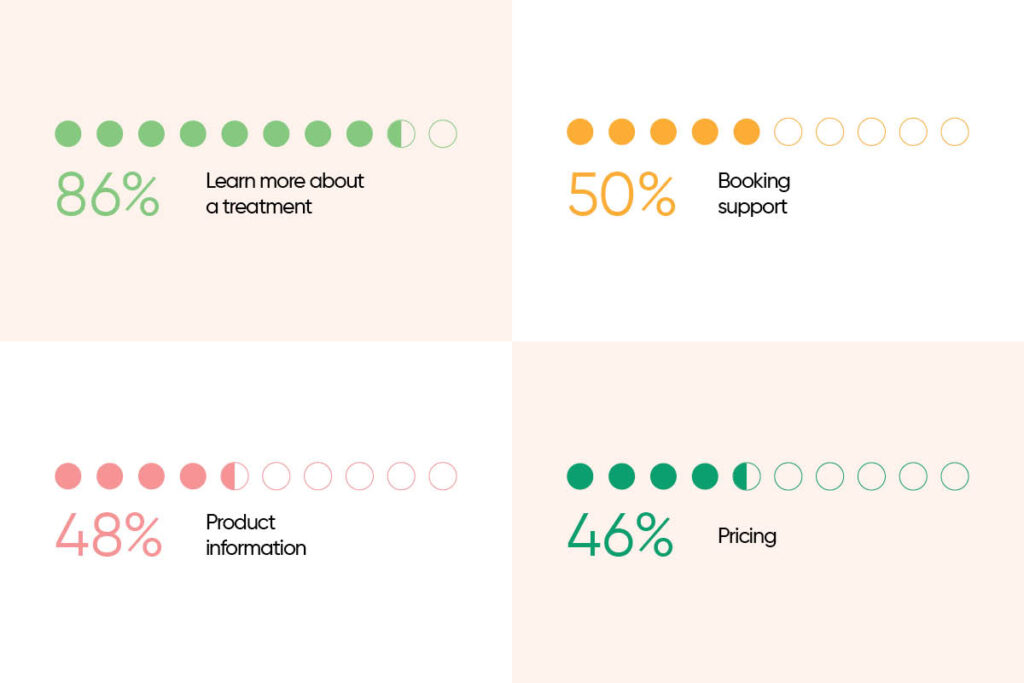
Patients enquire to get information. When asked in our research why they had contacted a clinic, 86% wanted to learn more about a treatment. Half wanted help with booking. Just under half asked about products, and slightly fewer asked about price.
| Reason for Enquiry | Share of Patients |
| Learn more about a treatment | 86% |
| Booking support | 50% |
| Product information | 48% |
| Pricing | 46% |
Patients could choose more than one reason, which is why the figures add up to more than 100%.
Pricing comes last of the four because it is rarely the opening question. Patients want to know a treatment is right for them before they work out what it costs.
How long will a patient wait for a reply?
Not long. In Phorest research, 69% of patients said that waiting more than 24 hours for a response would count against a clinic when they chose where to go.
That window is often missed. The clearest benchmark available comes from the US, where clinics using lead management take an average of 4.8 days to record first contact with a new enquiry. Around a quarter of clinics have lead management switched on at all.
This is not about effort. Enquiries arrive at nine in the evening, on Sundays, and halfway through a treatment. When they land somewhere nobody owns, a slow reply becomes the default rather than the exception. The clinics that reply quickly have usually decided in advance who replies.
What belongs in a first reply
Patients weigh up the reply itself, not only how fast it arrived. A useful first message does four things:
- Answers the question they asked, before anything else
- Explains what happens at the consultation, and what it costs
- Gives them something to come back to, such as a treatment page, an aftercare outline or before-and-after photos
- Names one next step, and the person who will take it with them
What works is practical information. What does not is a discount.
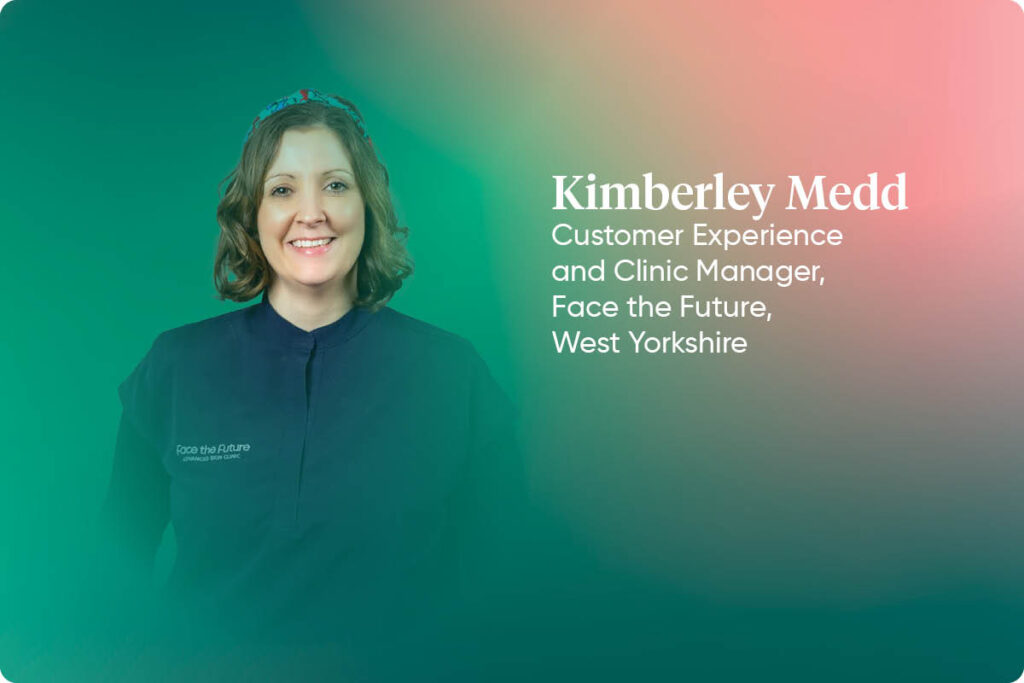
Kimberley Medd, Customer Experience and Clinic Manager at Face the Future, builds education into everything the clinic sends.
“Rather than just sending out offers, I try to send educational content as well. I’ll mix it up throughout the month, with either a theme or something educational. After a new lead comes in, they have a consultation and receive a dedicated personal email outlining exactly what was discussed.”
A patient who feels informed books more readily than one who feels chased.
How busy clinics protect the time
Laser and Skin Clinics runs four locations across Ireland, in Mullingar, Athlone, Dublin City and Malahide. Two years ago the team stopped leaving enquiries to whoever was free and brought someone in to manage leads.
Deputy GM Niamh Brunton is direct about what works.
“The biggest thing with the leads is you need to be willing to sit and have a conversation with them. We can’t catch them through email. Even if you make it personable, it just doesn’t build the same trust.”
Email still has a job at Laser and Skin Clinics. It follows up. It does not do the inviting. Most clinics cannot hire someone for this, and Niamh’s advice for them is to protect the time instead.
“We will allocate an hour a day if there are enough leads there. We mark it out of the diary and allow somebody from the front of house, or somebody who’s a great seller in the room, to step out and make the calls.”
Without that structure, she says, “it doesn’t get completed correctly, and you can lose leads very easily.”
She also asks her team to treat every enquiry as personal rather than routine. Some calls go nowhere, and she is relaxed about that. “Out of five, only one might answer, and that’s fine; one is still better than none.”
An hour a day only works if the enquiries sit in one place, with an owner, a status, and a record of what was said. That part belongs to your software, so the conversation can stay human.
Where to start
- Building strong foundations. Check that your standard reply answers the questions patients ask most often before it invites them to book.
- Scaling with confidence. Build one educational sequence that every enquiry receives, so the quality of the reply does not depend on who is on shift.
- Leading at scale. Standardise the enquiry and pre-consultation experience across every location, so every patient gets the same guidance.
How Phorest supports this
Replying quickly and consistently is an operational problem before it is a writing problem. Three parts of Phorest carry it:
- Lead Management gives every enquiry an owner, a status, and a record of what was said, so a slow reply stops being the default.
- Two-Way Chat keeps the conversation in the channel the patient chose and attached to their record, rather than on somebody’s phone.
- Online Booking gives the patient who has already decided a way through, without waiting for anyone.
None of it makes the conversation less personal, but decides whether the conversation happens at all.
The consultation starts earlier than you think
It no longer starts in the treatment room. It starts with the first message a patient sends.
Most clinics are not losing enquiries because the care is poor. They lose them in the hours between a question arriving and someone answering it.
FAQs:
How quickly should an aesthetic clinic reply to an enquiry?
What should a clinic include in a first reply to an enquiry?
Is it better to call or email a new enquiry?
Why do patients enquire instead of booking straight away?