


Sometimes, SMS or email booking reminders just aren’t enough to get a client to show up. Eliminating no-shows completely might be unattainable, but you can reduce how often they happen and make sure most of them only occur when there’s a real emergency.
Key insights
- Combine five tactics instead of relying on one. Tracking root causes, automated reminders, a clear no-show policy, a late cancellation policy and booking deposits each close a different gap.
- Online booking roughly halves no-shows. Phorest data shows appointments booked online see 49% fewer no-shows than those booked by phone or in the salon.
- Deposits make the biggest difference. When a deposit is required at booking, Phorest data shows up to 69% fewer no-shows.
- Forgetting is one of the most common causes, so reminders are the quickest win. Phorest data shows salons that send SMS reminders see 38% fewer no-shows.
- Last-minute rescheduling is the new no-show. A minimum cancellation notice period stops clients from dodging fees by pushing appointments far into the future.
- Policies work best when they’re shared upfront. Clients accept fees they agreed to at booking, especially when your team explains them in a friendly, professional way.
The most reliable way to reduce salon no-shows is to combine five things. Track who’s no-showing and why. Send automated reminders. Set a clear no-show policy. Add a late cancellation policy. Take a deposit or card details at booking. Each one closes a different gap, and together they make showing up the easy choice for clients.
Here’s how each one works, and how you and your team can build a culture where clients show up when they’re supposed to.
What’s the best framework for reducing salon no-shows?
| Tactic | What it fixes | How Phorest supports it |
| Track the root causes | Repeat offenders and hidden patterns by day, time or team member | Reporting suite, client profile notes and alerts for clients with a no-show history |
| Automate reminders | Clients who simply forget | Automated SMS and email reminders sent at a set time before each appointment |
| Set a no-show policy | Clients who don’t value your time | Policy shared in booking confirmations and online booking T&Cs |
| Add a late cancellation policy | Last-minute reschedules that leave gaps you can’t fill | Minimum cancellation notice period in Online Booking settings |
| Take booking deposits | Low commitment at the point of booking | Online booking deposits and secure card storage for no-show charges |
Why are clients no-showing at your salon?
Clients may no-show because they forget their appointment, experience a last-minute change of plans, find rescheduling difficult, or aren’t fully committed to the booking. The best way to understand why clients are no-showing at your salon is to track when missed appointments happen, which clients are affected, and whether patterns emerge over time.
Start by calculating your no-show rate so you have a baseline to measure against:
No-show rate = (number of no-shows ÷ total appointments booked) × 100
For example, if your salon booked 400 appointments last month and 20 clients didn’t turn up, your no-show rate is 5%. Multiply those 20 missed appointments by your average service value, and you’ll see what no-shows are really costing you.
Next, look for patterns in your client management data:
- Days and times: Do certain appointment slots see more no-shows than others?
- Client history: Are the same clients repeatedly missing appointments?
- Team members: Do some team members experience more no-shows than others?
- Booking behaviour: Are clients who book further in advance more likely to miss their appointments?
With Phorest’s reporting suite and client management features, you can record relevant insights directly on client profiles and set up notifications to flag clients with a history of no-shows before they book. This gives your team the opportunity to address repeat no-shows and, if necessary, restrict online booking.
Once you understand where your no-shows are coming from, you can take targeted action, whether that’s improving appointment reminders, making rescheduling easier or reviewing your policy for repeat no-shows. This helps you build a more reliable schedule for your salon, your loyal clients and your team.

Do appointment reminders actually reduce no-shows?
Yes. Forgetting is one of the most common reasons clients miss appointments. Life gets busy, and a booking made six weeks ago is easy to lose track of. Automated reminders are the simplest fix, because they reach every client without your team lifting a finger. According to Phorest data, salons that send SMS reminders experience 38% fewer no-shows.
A reminder routine that works for most salons looks like this:
- A confirmation at the time of booking that includes the date, time, service and your no-show policy.
- A reminder a day or two before the appointment. This gives clients time to let you know if they can’t make it, and gives you time to fill the slot.
- An easy way to reply or reschedule, so a client who can’t come tells you instead of just not turning up.
With Phorest, you can automate these email and SMS reminders so clients are reminded without you having to put any time or effort into sending them. Reminders also give you grounds to enforce no-show fees if a client still chooses not to show up. After all, they can’t say they weren’t told.
Related: Learn more about crafting effective SMS appointment reminders in our Salon Owner’s Guidebook to SMS Marketing
What should a salon no-show policy include?
A salon no-show policy should clearly explain what counts as a no-show, what fees or consequences apply, how exceptions are handled, and when clients agree to the policy. It should be easy to understand, shared before appointments are booked, and applied consistently across your business.
Most effective salon no-show policies cover:
- What counts as a no-show: For example, not arriving and not contacting the salon before the appointment time.
- What the consequence is: A percentage of the treatment price, the full price, or a three-strike rule before clients lose the ability to book online.
- How exceptions are handled: Who on the team can waive a fee for a genuine emergency.
- Where clients agree to it: At the point of booking, so there are no surprises later.
Your no-show policy should be straightforward, not a convoluted document full of legal jargon. Share it openly in your appointment confirmation messages, include it in the terms and conditions of your online booking, and post it on your social media channels.
Life can throw a surprise curveball, and genuine emergencies will lead to the occasional no-show. But missed appointments can leave gaps in your schedule and affect revenue. A clear policy helps set expectations while giving your team a consistent way to handle missed appointments.
Clients are more likely to understand your policy when it’s shared professionally. Give your team a short script so the message lands the same way every time. For example:
“Just so you know, we hold your time especially for you, so if you can’t make it, we ask for at least 24 hours’ notice. Missed appointments are charged at 50% of the service.”
Adjust the wording, notice period and fees to suit your own policy. Your clients will appreciate the transparency.

Do you need a late cancellation policy too?
Yes, in most cases. A no-show policy only covers clients who don’t turn up. A late cancellation policy covers clients who cancel or reschedule too close to their appointment for you to fill the slot, which can cost you just as much. Having both closes the gap clients use to avoid no-show fees.
Ever walked into your salon, opened your digital calendar and found that several of the day’s appointments were rescheduled overnight? That leaves your team with gaps in their columns and very little time to fill them. You’re not alone.
In recent years, some salon clients have tried to dodge no-show fees by rescheduling at very short notice, pushing appointments far into the future with no intention of ever coming in. It’s an emerging trend in the professional hair and beauty industry, and it has cost many businesses a great deal of time and revenue. That’s why we recommend a late cancellation policy alongside your no-show policy.
| Situation | What it looks like | How to handle it |
| No-show | The client doesn’t arrive and doesn’t get in touch | Apply your no-show policy and fee |
| Late cancellation | The client cancels inside your notice window | Apply a late cancellation fee, or a smaller one than for a no-show |
| Late reschedule | The client moves the appointment at the last minute, often far into the future | Set a cut-off for rescheduling, or require clients to call the salon |
As with your no-show policy, the terms are entirely up to your salon, but could include:
- A cut-off time for rescheduling appointments
- A fee for rescheduling appointments
- Allowing reschedules only if the client calls the salon in advance
If you want to stop clients rescheduling at short notice, set a minimum cancellation notice period in your Phorest Online Booking settings. Clients then can’t amend their booking within a set amount of time before their appointment.
Do booking deposits reduce no-shows?
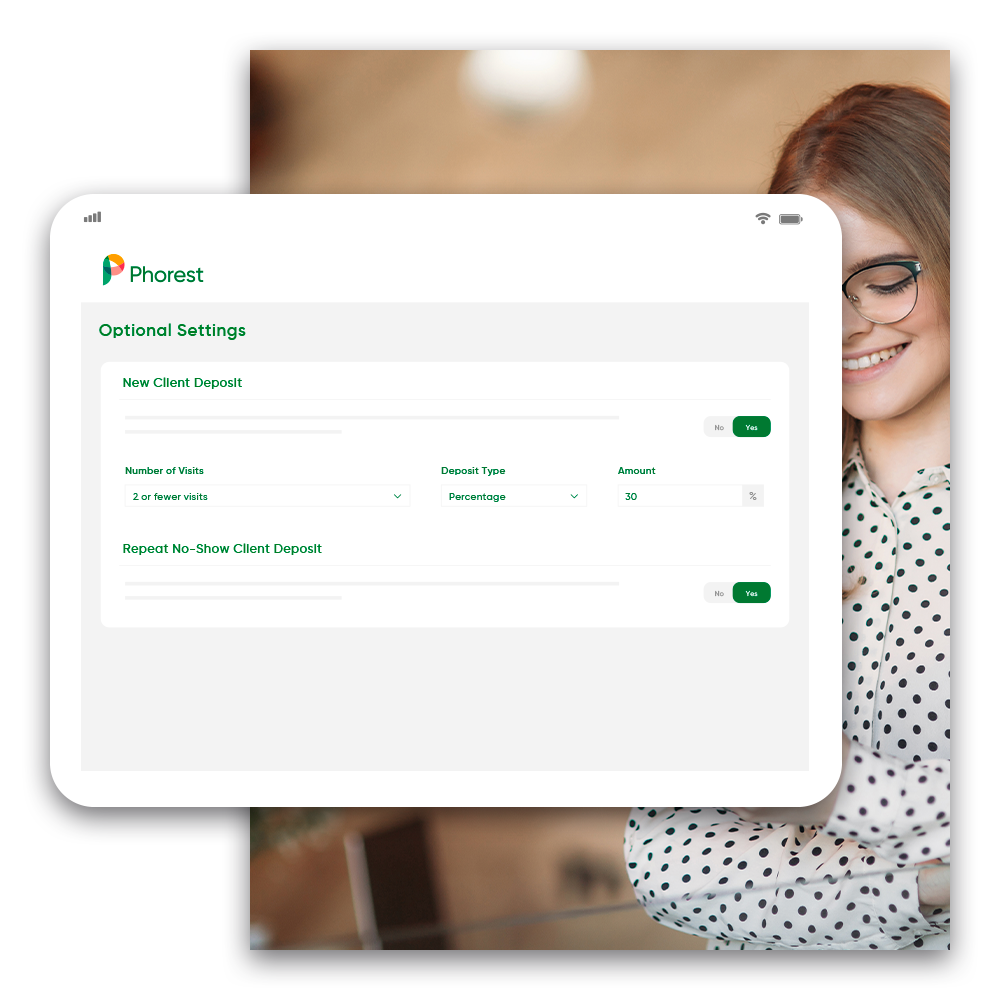
Yes, and they’re often the most effective tactic of all. Phorest data shows that appointments booked online see 49% fewer no-shows than those booked over the phone or in the salon. When clients are asked to pay a small deposit at booking, that rises to as much as 69% fewer no-shows.
Deposits work because a small financial commitment changes how clients think about their booking. You can tailor them to your salon’s needs:
- By client type: charge a higher deposit for new clients or those who’ve no-showed before, and a smaller one for loyal regulars.
- By service: take larger deposits for long or high-value appointments, where an empty chair costs you the most.
- With card details on file: when clients book online and save their card, you can charge the full price or a fee if they don’t show. It’s a deterrent for the client and a financial guarantee for your business.
Deposits also make your whole salon run more smoothly. Fewer gaps mean a more reliable schedule, a more predictable day for your team, and more availability for the clients who do turn up. It’s a win-win that protects your business and creates a respectful, professional atmosphere.
How do you build a no-show policy that actually works?
Start by tracking the root causes of your no-shows. Then define your policy and communicate it clearly to your team and your clients. Balancing enforcement with flexibility is key: some situations call for understanding, others for stricter action.
Here’s a quick checklist to get started this week:
Turn on online booking deposits, starting with new clients and high-value services.
Pull last month’s no-show report and calculate your no-show rate.
Flag repeat no-show clients on their profiles.
Check that automated reminders are switched on and timed well.
Write your no-show and late cancellation policies in plain language.
Add both policies to your confirmations, booking T&Cs and social channels.
Brief your team with a short script.
Ready to streamline your no-show process? Partner with Phorest, built to help premium salons grow, keep their teams’ columns full and keep clients coming back.
Frequently asked questions about salon no-shows
What is a normal no-show rate for a salon?
What's the difference between a no-show and a late cancellation?
How much should a salon charge for a no-show?
Will charging a no-show fee lose me clients?
When should I send appointment reminders?
How do I fill a slot after a last-minute cancellation or no-show?
How should I handle a client who keeps no-showing?

